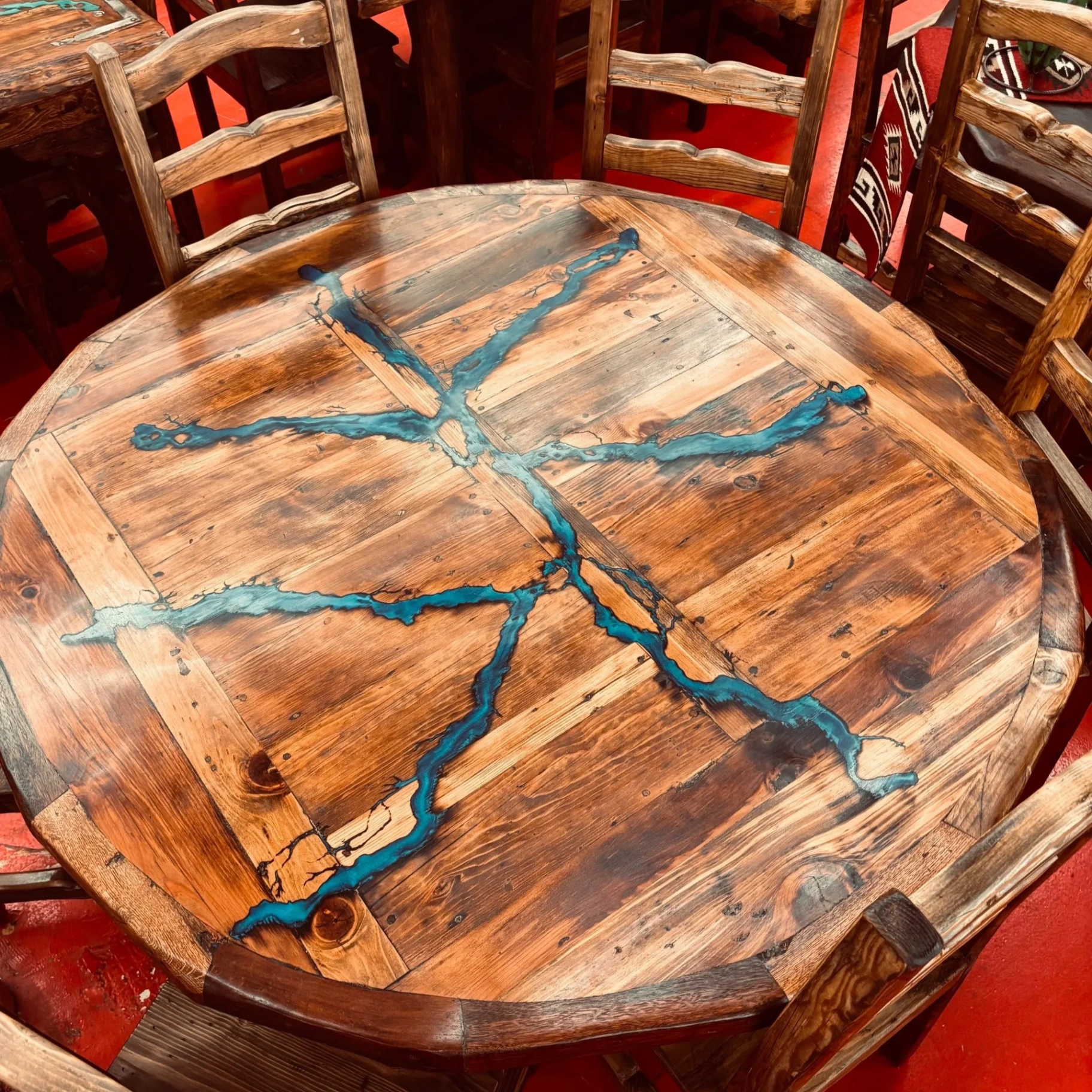
The Fractal Collection
Designed and curated in New Braunfels, TX. Our team uses special machinery and materials to create these beautiful, one of a kind pieces. Talk to a Casa Decor sales representative to order your custom piece today! Or, visit our stores to see what we have in stock.
What the fractal (Lichtenberg) wood-burning process is
Fractal or Lichtenberg wood burning is a technique that creates branching, lightning- or tree-like patterns in wood by subjecting it to high-voltage electrical discharge. The electricity follows paths of least resistance through the wood, carbonizing the surface along those paths and leaving dark, fractal-shaped sclerified marks.
How it’s typically done (high-level overview)
A high-voltage source (often a transformer from devices like microwave ovens, neon sign transformers, or other high-voltage supplies) is used.
The wood surface is usually moistened or treated to lower resistance so the current can travel across it.
Electrodes are placed at two points on the wood; when energized, the current arcs through the surface between electrodes, creating branching burn patterns.
The process continues until the desired pattern is created or the operator interrupts the arc.
Bring a little Texas-sized charm into your home with our rustic wood furniture. Picture mesquite dining tables that show off natural knots and grain, cozy for a perfect slow Sunday mornings, buffets that hold everything (including your secret snack stash), and coffee tables that beg for board games and strong coffee. Each piece is built sturdy enough to survive family game night, holiday feasts, and the occasional dance party.
Why you’ll smile:
Authentic wood with character — every scratch and knot tells a story.
Built tough for real life (kids, pets, and in-laws included).
Timeless styles that mix with everything from farmhouse to modern.
Made for Texans who love comfort, charm, and a little adventure.
Resin and inlay work can elevate a rustic wood piece from beautiful to truly one-of-a-kind. Adding resin—clear, tinted, or metallic—fills voids, stabilizes soft or knotty areas, and creates striking river tables or accent veins that contrast with the natural grain. Resin pours can be glossy or matte and may include embedded items like shells, stones, or metal shavings for a customized look.
Inlay options range from simple contrasting wood strips to intricate designs using materials such as metal, mother-of-pearl, turquoise, or brass. Inlays are routed or chiseled into the surface and set flush with the surrounding wood, providing durable decorative detail that complements the rustic aesthetic. Combining resin with inlay—such as filling routed channels with colored resin and topping them with a thin brass or wood inlay—lets you mix texture, color, and shine while preserving the warmth of real wood.
When considering resin and inlay for dining tables, beds, or buffets, keep these practical points in mind:
Design balance: Use resin and inlay as accents rather than overwhelming the natural wood grain.
Durability: Choose high-quality epoxy resins formulated for furniture and ensure proper curing to prevent discoloration or soft spots.
Finish compatibility: Match the final surface finish (gloss, satin, or matte) across wood and resin for a cohesive look.
Maintenance: Resin is generally easy to clean, but deep scratches may require sanding and re-polishing; inlays of softer materials can wear differently than hardwood.
Professional installation: Complex pours, structural fills, or intricate inlays benefit from experienced craftsmen to avoid issues like uneven curing, air bubbles, or poor adhesion.
At Casa Decor, we integrate resin pours and precision inlays into our custom pieces when clients want a rustic foundation with modern accents—preserving the character of real wood while adding durable, eye-catching details.